
SCHOOL PROFILE
Ateneo de Iloilo – Santa Maria Catholic School
(怡朗亚典耀圣母学校)
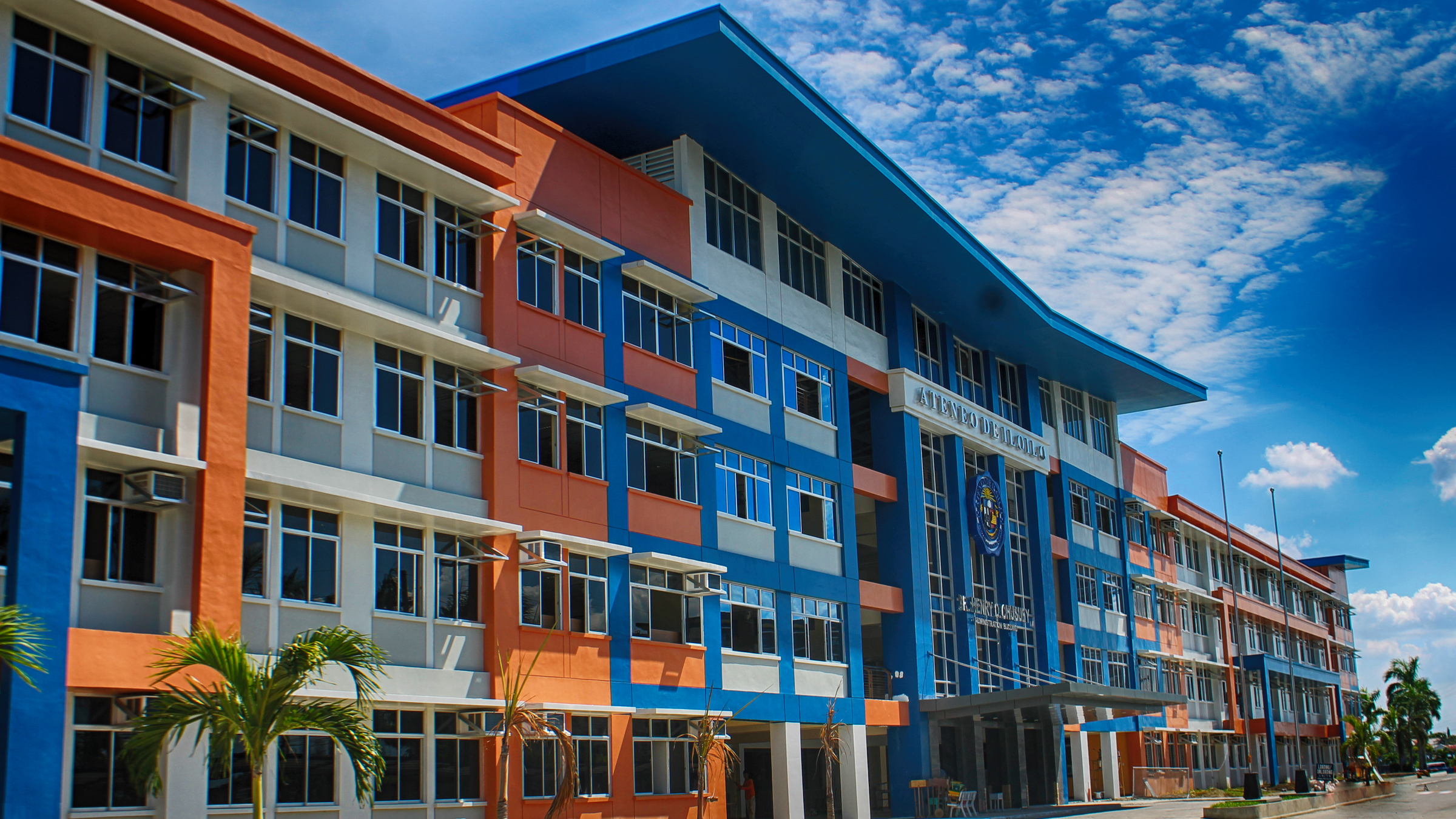
The Ateneo de Iloilo-Santa Maria School is a private, Jesuit, Catholic, Chinese-Filipino Basic Education school run by the Philippine Province of the Society of Jesus in Atria Park District, San Rafael, Mandurriao, Iloilo City, Philippines. It is a non-stock and non-profit institution duly accredited by the Philippine Council for NGO Certification (PCNC). It is also recognized by the Philippine Accrediting Association of Schools, Colleges and Universities (PAASCU) with Level 2 Accreditation and is a recipient of the FAPE-DepEd-FASTPE Program.
Ateneo de Iloilo began in 1958 as a parochial school named Santa Maria Catholic School. In 2004, the school was officially renamed Ateneo de Iloilo-Santa Maria Catholic School. The school is an integrated basic education (K-12) school and its curriculum includes Chinese language, Christian Living Education, and Ignatian Spirituality programs. It is known for its excellence in the fields of academics and values formation.
History
To Bring Christ to Orient Lands
A brief history of Ateneo de Iloilo – Santa Maria Catholic School
1593
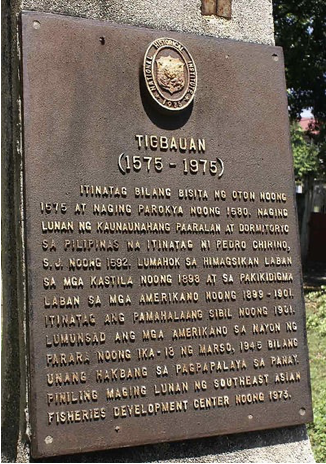
The first Jesuit mission stations were established in the Visayas in Tigbauan, Panay. There, Fr. Pedro Chirino opened the first school of the Society of Jesus in the Philippines. It was a catechetical school for natives. Later the school was expanded with an elementary school both for Spanish and Filipino boys.
1953
After the political shift in China, the Jesuits continued their mission in Iloilo City, dedicated to serving the city’s Chinese community.
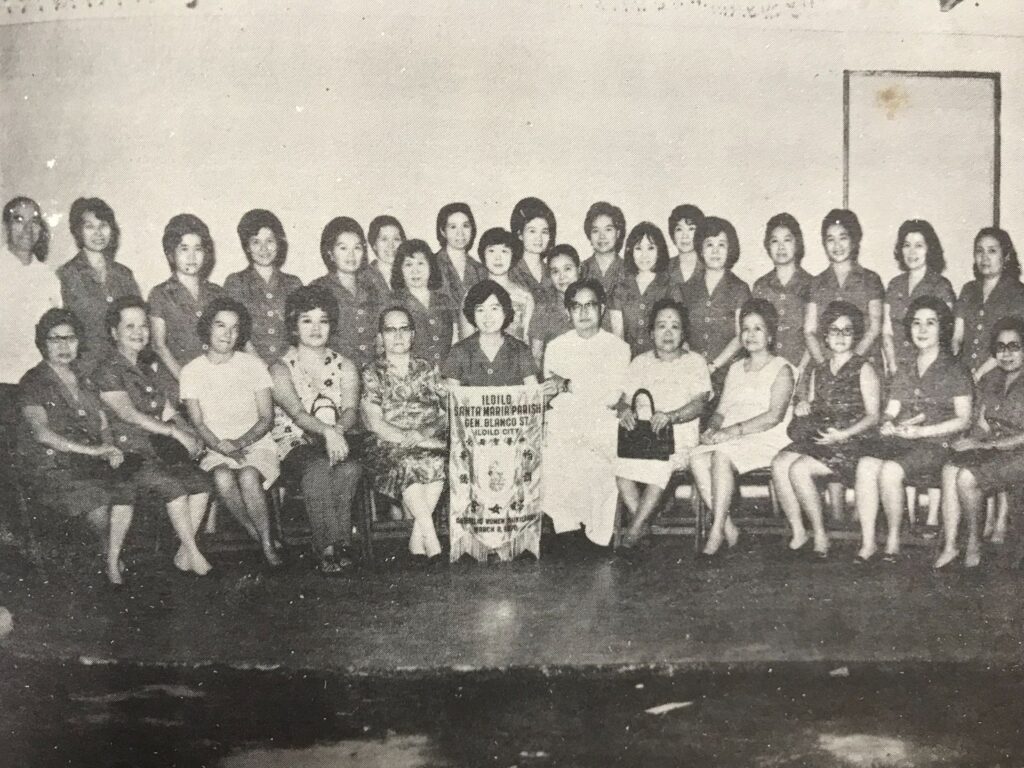
Santa Maria Parish, under the patronage of Our Lady of China, was established.
1958
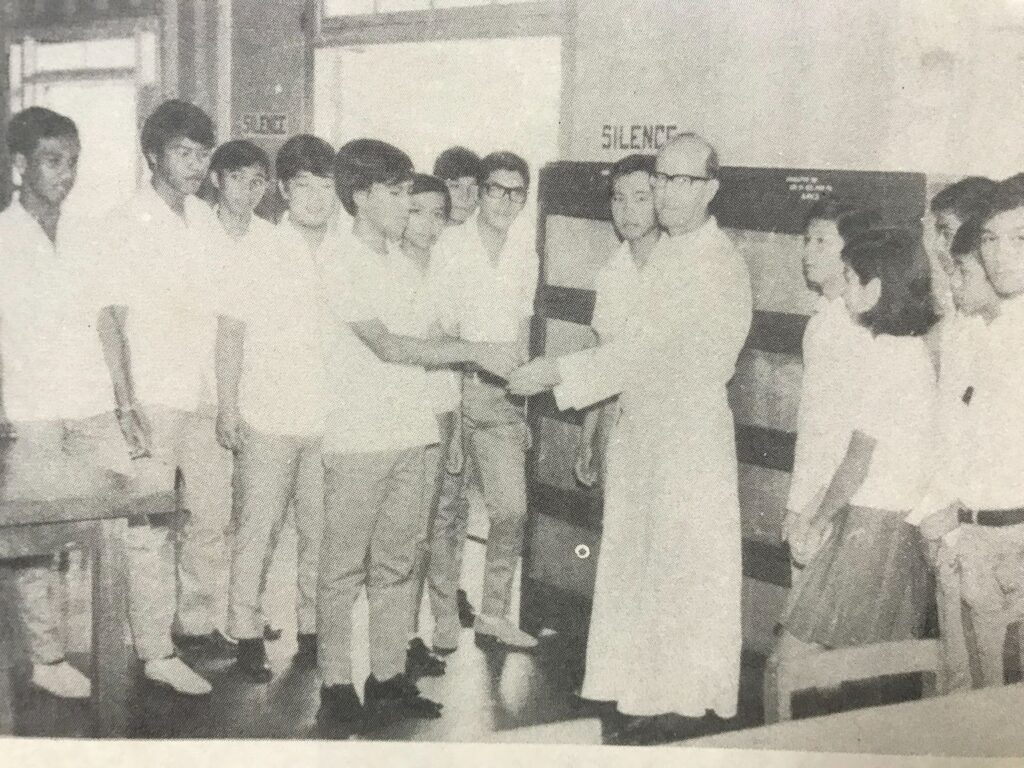
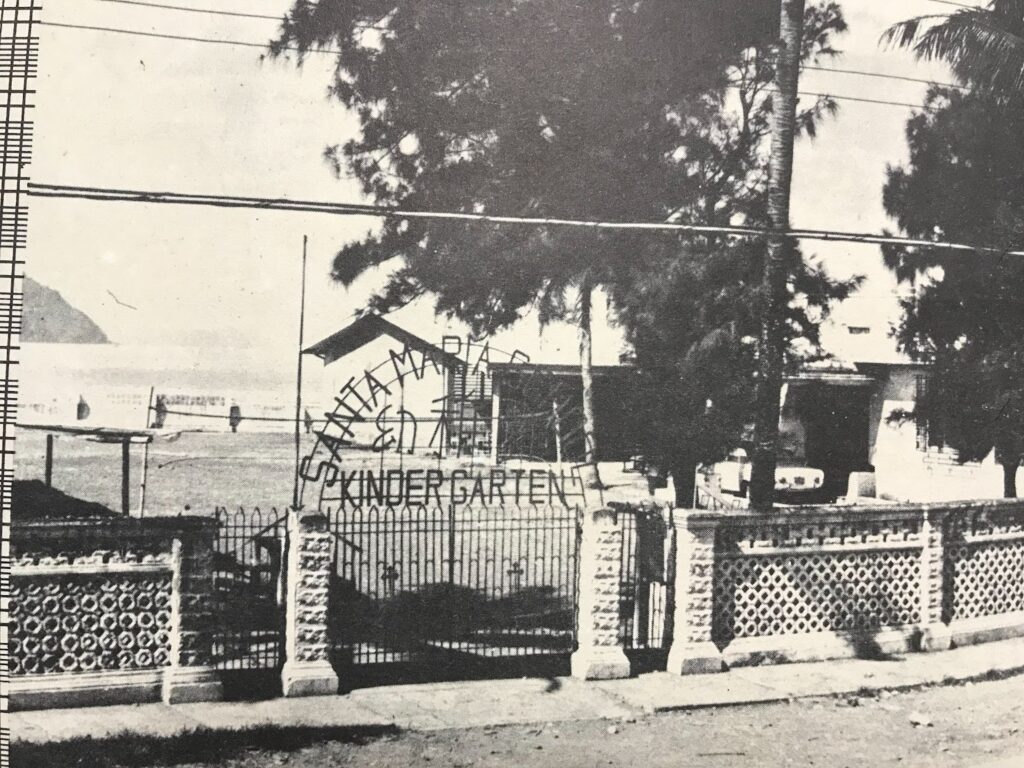
With only nine students, Fr. Andrew Joliet and Fr. Santiago Leon opened a parochial school. The next year saw the construction of a two-story wooden building comprising eight classrooms.
1962
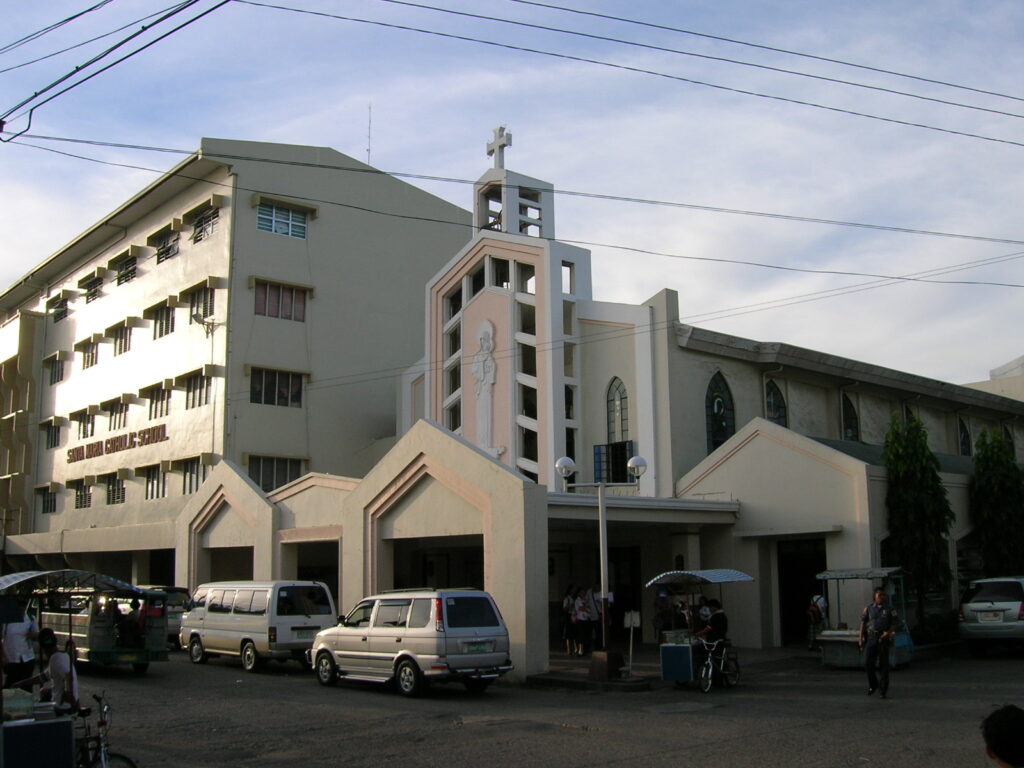
Part of the school’s facilities were erected across the church on the Lopez brothers’ property.
1966
The first batch of grade school graduates and the first batch of high school freshmen.
1968
The Philippine government recognized Santa Maria Catholic School as a Filipino school program with a comprehensive Chinese language included in its curriculum.
1970
The first high school graduation with 18 graduates receiving their diplomas.
From nine elementary students in 1958, the school population swelled to 615 enrollees – for high school alone.
1977
To accommodate the growing population of the school, a four-story concrete building was constructed, to replace the original wooden structure.
1980s
The integration of the Jesuits of the China Province delegation in the Philippines into the Jesuit Philippine Province in September 27, 1988 resulted in all the former delegation works being placed under the care and control of the Philippine Jesuit Provincial Superior.
1990s
In 1991, Santa Maria Catholic School went through the PAASCU Preliminary and Formal Survey. The Grade School Department was granted a three-year PAASCU Accreditation in 1995; the High School Department followed suit the year after. In 1999, the school applied for PAASCU I Accreditation and was granted five years.
2000s
In 2000, Fr. Manuel Uy, Jr, S.J., assumed the post of Director-Principal. In 2002, Fr. Emerito Salustiano dela Rama, S.J. assumed the position of Principal of the Grade School Department. For the School Year 2004-2005, Mrs. Aurora dela Cruz was appointed as the first lay Principal of the High School Department.
In April 30, 2004, a Memorandum of Agreement was signed by Jesuit Father Provincial Romeo Intengan, S.J., SMCS Director Fr. Uy, S.J., and Mr. Victor Pison of the Kauturan Pison Development Corporation (Kapideco) formalizing the establishment of Ateneo de Iloilo-Santa Maria Catholic School in its new 7.5-hectare prime location in Pison Avenue, San Rafael, Mandurriao, Iloilo City.

Past School Administrators
Directors
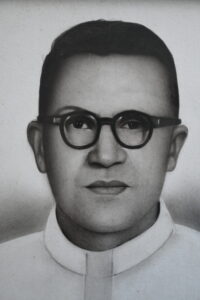
Fr. Andrew Joliet, S.J.,
Founder/Director (1958-1967)

Fr. Santiago Leon, S.J.,
Founder/Principal (1958-1967), Director (1967-1968)

Fr. Felix Maiza, S.J.
Director/Principal (1968-1971)
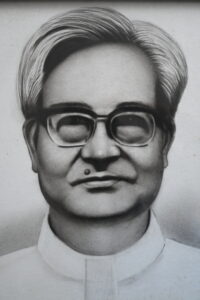
Fr. Peter Ignatius Li, S.J.,
Director (1971-1977)

Fr. Albert Ricard, S.J.,
Director/Principal (1977-1978)

Fr. John Chi, S.J.,
Director/Principal (1978-1991)
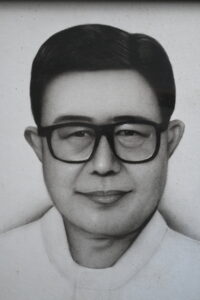
Fr. Renato Puentevella, S.J.,
Director/Principal(1991-1996)

Fr. Enrique Lalana, S.J.,
Director/Principal (1996-2000)

Fr. Manuel Uy, S.J.,
Director (2000-2008)

Fr. Emerito Salustiano de la Rama, S.J.,
President (2010-2012)

Fr. Joseph Haw, S.J.,
President (2012-2019)
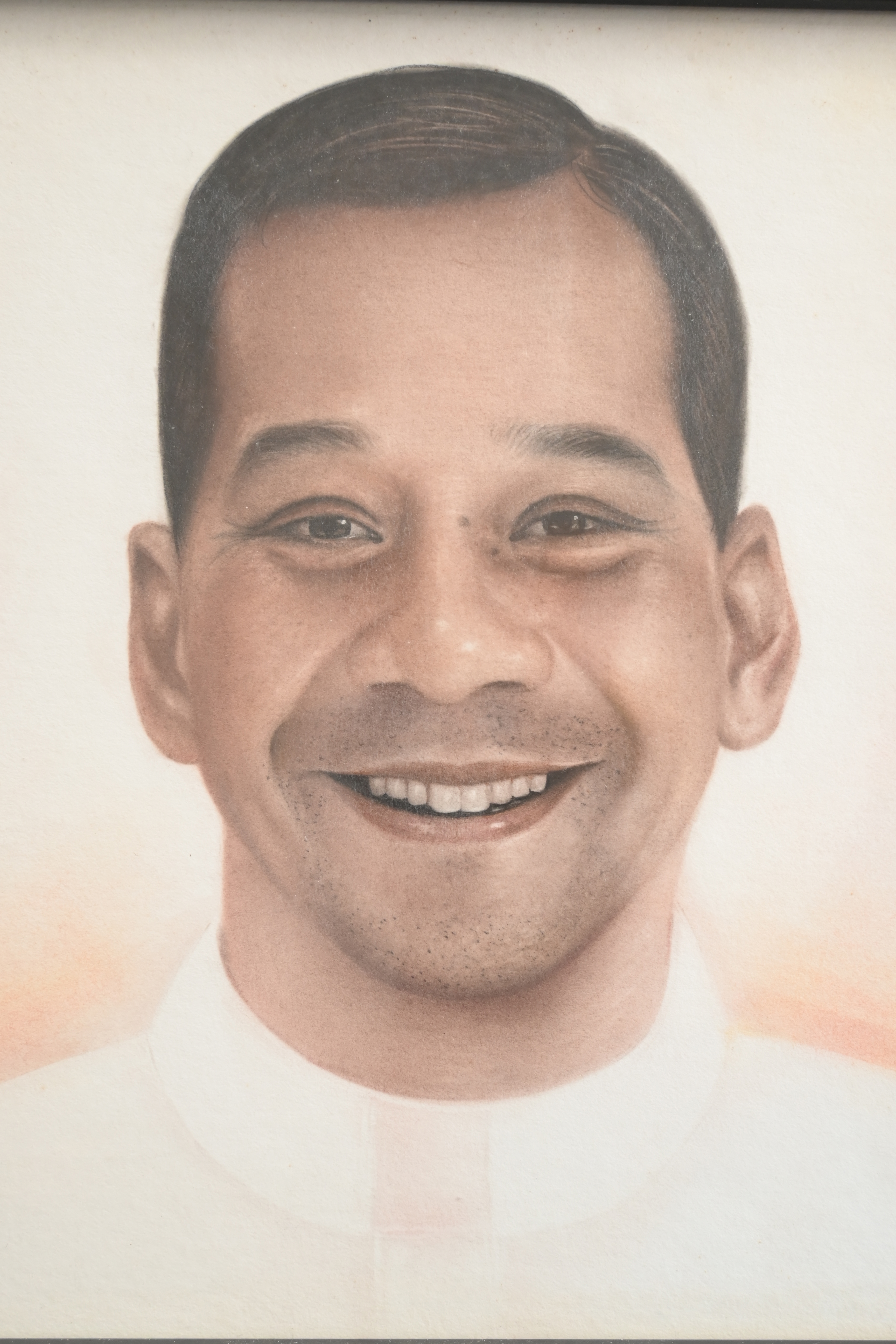
Fr. Joseph Raymund Patrick S. Sanchez,
President (2019-2025)
Principals
- Fr. Joseph Raymund Patrick S. Sanchez, President / Acting Principal(2019-2025)
- Dr. Michel E. Guevarra, IBEd Principal (2022-2024)
- Dr. Herman Lagon, Integrated Basic Education (IBEd) Principal (2018-2025)
- Fr. Joseph Haw, S.J., High School Principal (2016-2018)
- Ms. Ma Cecilia Japitana, Grade School Principal (2013-2018)
- Mrs. Rosario Dordas, High School Principal (2013-2016)
- Mrs. Nelia Emmanuel, Grade School Principal (2009-2013)
- Mrs. Aurora dela Cruz, High School Principal (2008-2013)
- Fr. Emerito Salustiano de la Rama, S.J., (2003-2009)
- Fr. Manuel Uy, S.J., Principal (2000-2002); High School Principal (2002-2008)
- Fr. Enrique Ma. Lalana, S.J., (Director/Principal (1996-2000)
- Fr. Renato Puentevella, S.J., Director/Principal(1991-1996)
- Fr. John Chi, S.J., Director/Principal (1978-1991)
- Fr. Albert Ricard, S.J., Director/Principal (1977-1978)
- Fr. Felix Maiza, S.j., Director/Principal (1968-1971)
- Fr. Santiago Leon, S.J., Founder/Principal (1958-1967), Director (1967-1968)
Vision, Mission, and Goals
Vision
We are the Jesuit, Catholic, Chinese-Filipino Basic Education Institution in Western Visayas. We are a community committed to forming leaders who pursue excellence that is ignited by love and service.
Mission
As a Catholic School, we form a community that is faithful to the teachings of Christ, men and women who seek union with the Creator through love and service of neighbor.
As a Jesuit School, we nurture each person’s God-given potentials so that he acts with generosity and desires to always do more (magis) for the greater glory of God.
As a Chinese-Filipino School, we form a community that has a genuine love for the Filipino nation and its cultural heritage. Rooted and inspired by the history of our mission for the Chinese-Filipinos in Iloilo, we likewise seek to develop a community that understands and appreciates the Chinese-Filipino heritage thereby becoming an instrument of sincere dialogue with other cultures.
Goals
- Academic Formation: to form well-rounded students who are open to growth and who constantly strive to learn
- Psycho-Emotional Formation: to form students with a realistic self-knowledge and well-grounded values that will enable them to relate well with others and to cope with life’s challenges.
- Spiritual Formation: to form students who have a personal relationship with Christ, who are committed to do what is right and good, guided by a habit of reflection
- Social Formation: to form students who are sensitive to and responsive in promoting justice, peace and integrity of creation
Core Values
The 7C’s
At the end of their basic formation, Ateneans are expected to embody the School’s core values: competence, conscience, character, compassion, community, culture, and Christ-centeredness—the seven (7) C’s.
COMPETENCE
- demonstrates academic excellence
- is well-rounded
- is open to growth and learning
CONSCIENCE
- discerns prayerfully one’s actions and decisions
- commits to do what is good and right
CHARACTER
- appreciates and develops one’s God-given gifts
- accepts one’s shortcomings and strives to improve oneself for the better
- takes responsibility for one’s actions
- appreciates the value of order, harmony and efficiency in life
COMPASSION
- fueled by love and service of others
- shows genuine love for the poor and marginalized
COMMUNITY
- leads others for the good
- collaborates with others
- strives to contribute to nation-building
- deals with God’s creation with care and respect
CULTURE
- embraces one’s Filipino and Ilonggo identity, values, customs and tradition
- appreciates the Chinese-Filipino heritage and has the facility of the language
- engages oneself in dialogue with other cultures
CHRIST-CENTEREDNESS
- exerts efforts to be the other Christ in words and deeds
- exhibits a genuine love of the person of Christ by committing oneself to His mission
- does everything for the greater glory of God
- recognizes Christ in every individual
KEY VALUES IN ATENEO DE ILOILO’S IGNATIAN (ATENEO DE ILOILO-SMCS) EDUCATION
The Ignatian values described below are inseparable charisms derived from the lived experience of Ignatius, and thus are part of the living Ignatian tradition all Ateneans will continue to shape. They are a means, not an end. They are strategies and standards in accomplishing the transformation of our world and ourselves.
Finding God In All Things
St. Ignatius of Loyola taught others to experience life attuned to God’s activity in everyday circumstances. Finding God in all things is an invitation to encounter God’s presence in each moment, to become aware of God’s beauty in everything and to notice God’s action in all the events of our lives through an ongoing process of personal discernment. As such, every academic discipline provides hope to encounter the Divine.
Cura Personalis
Latin meaning, “care for the person” or “personal care,” Cura Personalis is having concern and care for the personal development of the “whole person” and dedication to promoting human dignity. This includes being open to and accepting of a person’s personal, physical, psycho-emotional, social, religious, and spiritual development. It also describes the type of care we give as educators, fomators, and students. We give not only of our knowledge, expertise, skills, time, talents, and resources, but also of ourselves. The care given, and the care received, is “personal care,” not “institutionalized care.”
Magis
Latin meaning the “more” or “the greater good,” Magis embodies reflection and discernment: “What is the best choice in a given situation, of several good choices, to better glorify or serve the Lord? Choosing between options encountered in life with a primary focus of being “God centered.” It is being “allergic” to mediocrity or having this endless desire to do greater things for what is good, right, just, and beautiful. “Magis” does not mean, however, “to always do or give more to the point of personal exhaustion.” It is a value centered to Ignatian spirituality and encompassed by the Latin phrase, Ad Majorem Dei Gloriam (AMDG), meaning “For the Greater Glory of God,” which is the motto of the Society of Jesus.
Men and Women for and with Others
A spirit of giving and providing service for those in need, and recognizing that all humans have physical, emotional, and spiritual needs. In 1973, Father Pedro Arrupe, S.J. (previous Superior General of the Society of Jesus), put it this way: “Men and women who will live not for themselves, who cannot even conceive of a love of God, which does not include a love for the least of their neighbors, and who are completely convinced that a love of God, which does not result in justice for all, is a farce.” Father Peter-Hans Kolvenbach, S.J., also a former Superior General of the Society of Jesus, describes our goal to form leaders who are “men and women of competence, conscience and compassionate commitment.” This value also embodies mutuality and equality among those who are serving and being served.
Faith That Does Justice
All individuals (faculty, staff, students, parents, guardians, alumni, and other ADI-SMCS stakeholders) are encouraged to seek justice for all God’s creatures, especially the poor and marginalized. According to the Gospel, our goal is to work for the betterment of society as a whole. This is what “A Faith That Does Justice” actually means. We aim to form change agents–reflective individuals who are able to take responsible action on moral and ethical issues and who will be change agents in society, “contemplatives in action.”
School Symbols
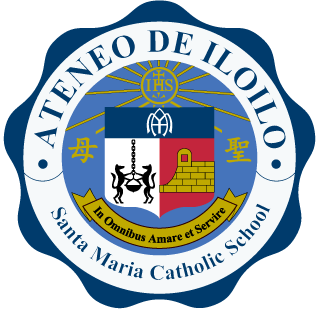
School Seal

School Symbol

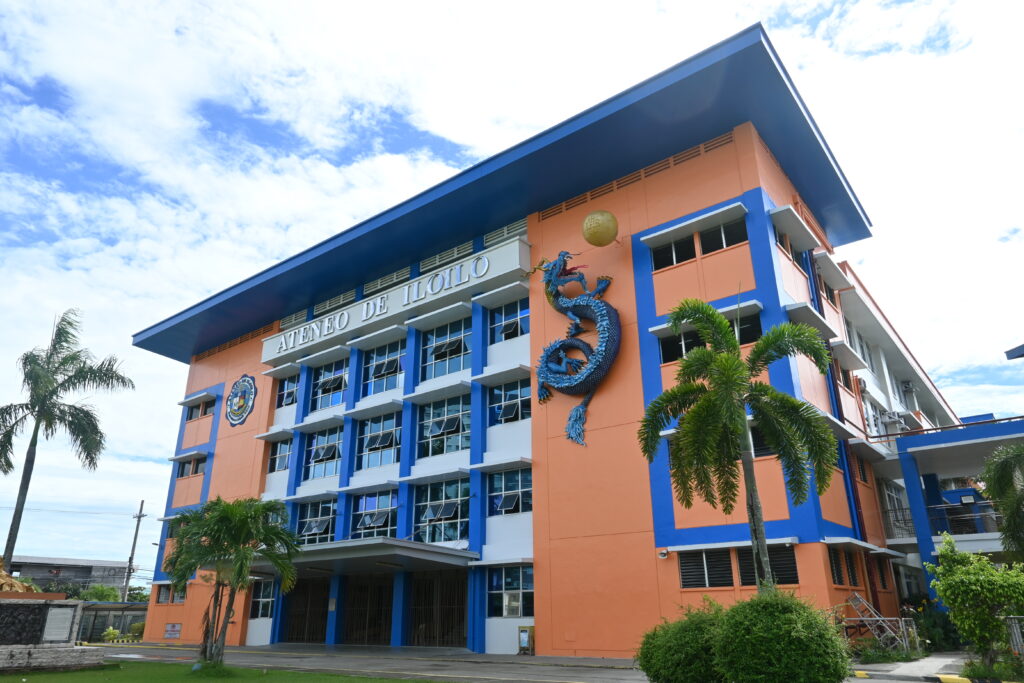
The Blue Dragon serves as the central symbol for Ateneo de Iloilo-Santa Maria Catholic School, embodying its seven core values: Character, Competence, Culture, Compassion, Conscience, Community, and Christ-centeredness. Drawing inspiration from the positive attributes of the Oriental dragon—such as valor, wisdom, and agility—the school aims to mold students into individuals of great moral strength, who are skilled in many fields, and are deeply connected to their Chinese, Filipino, and Ilonggo heritage. The dragon’s link to the four great rivers of China highlights the importance of self-sacrifice and service to the community, guiding students to become persons of compassion with a well-developed conscience.
The symbol is further enriched by its religious significance. The blue color honors the school’s patroness, the Blessed Virgin Mary as Our Lady of China. The shining pearl held by the dragon represents the Pearl of Great Price, which is Jesus Christ. This symbolizes the school’s hope that its graduates will be Christ-centered, willing to sacrifice everything to attain this most valuable treasure. Ultimately, the Blue Dragon is a fitting image for the school’s mission to shape students who are not only competent and cultured but also guided by a strong character and a compassionate, Christ-centered conscience.